
We Become What We Practice
How ordinary practices prepare us to show up for one another.

A year ago, while crossing the country, a friend handed me Anne Morrow Lindbergh’s Gift from the Sea. That slim volume became the inspiration for my first Substack essay.
Lindbergh argued that solitude was not a retreat from the world. It was preparation to reenter it with greater clarity, courage, and intention.
A year later, a different question has taken hold:
If solitude prepares us, what sustains us?
What sustains me, I’ve come to believe, is practice.
From November through May, while I’m in Boulder, I practice yoga six days a week: hot yoga at dawn four mornings a week and a flow class at noon twice a week. The hot classes always follow the same choreography, but each teacher—Bonnie, Derise, Jen, and Jordan—brings their own distinct gifts.
Bonnie Pierce’s gift comes in song.
About two-thirds of the way through class—after the one-legged balancing poses and all the wobbling that comes with them—we settle onto our mats for a brief, one-minute Savasana.
During that minute, Bonnie always sings a few verses—sometimes “Ave Maria,” other mornings “Pie Jesu.” The soothing, grounding vibrations of her voice settle over the room.
One person offers a gift.
Fifty people receive it.
No one resists.
Now it’s summer at our family cabin in Pennsylvania’s Endless Mountains, and the rhythm loosens. Some mornings it’s just me and my mat; others, a walk through the woods or a few quiet minutes meditiating by Patrick’s rock.
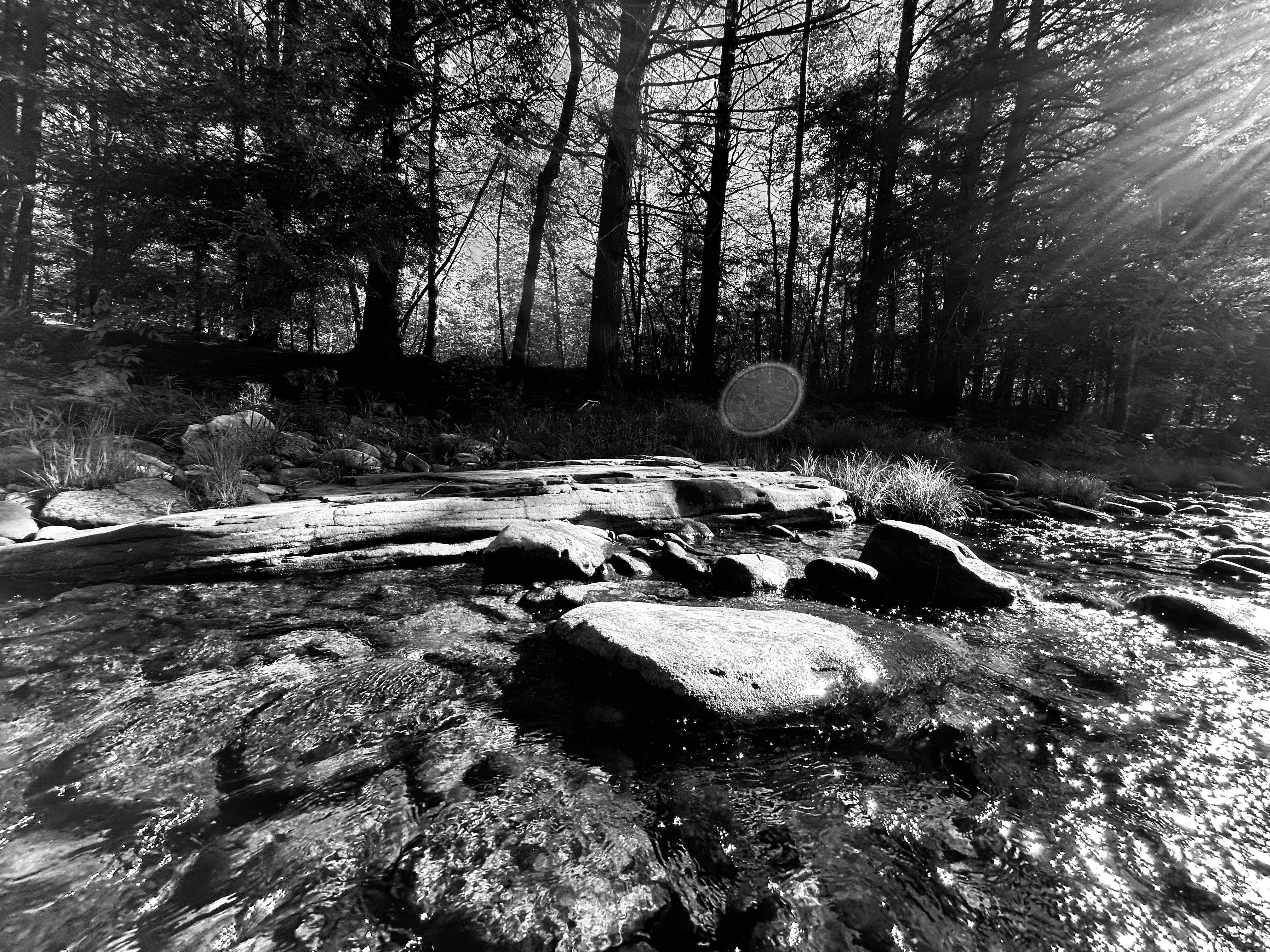
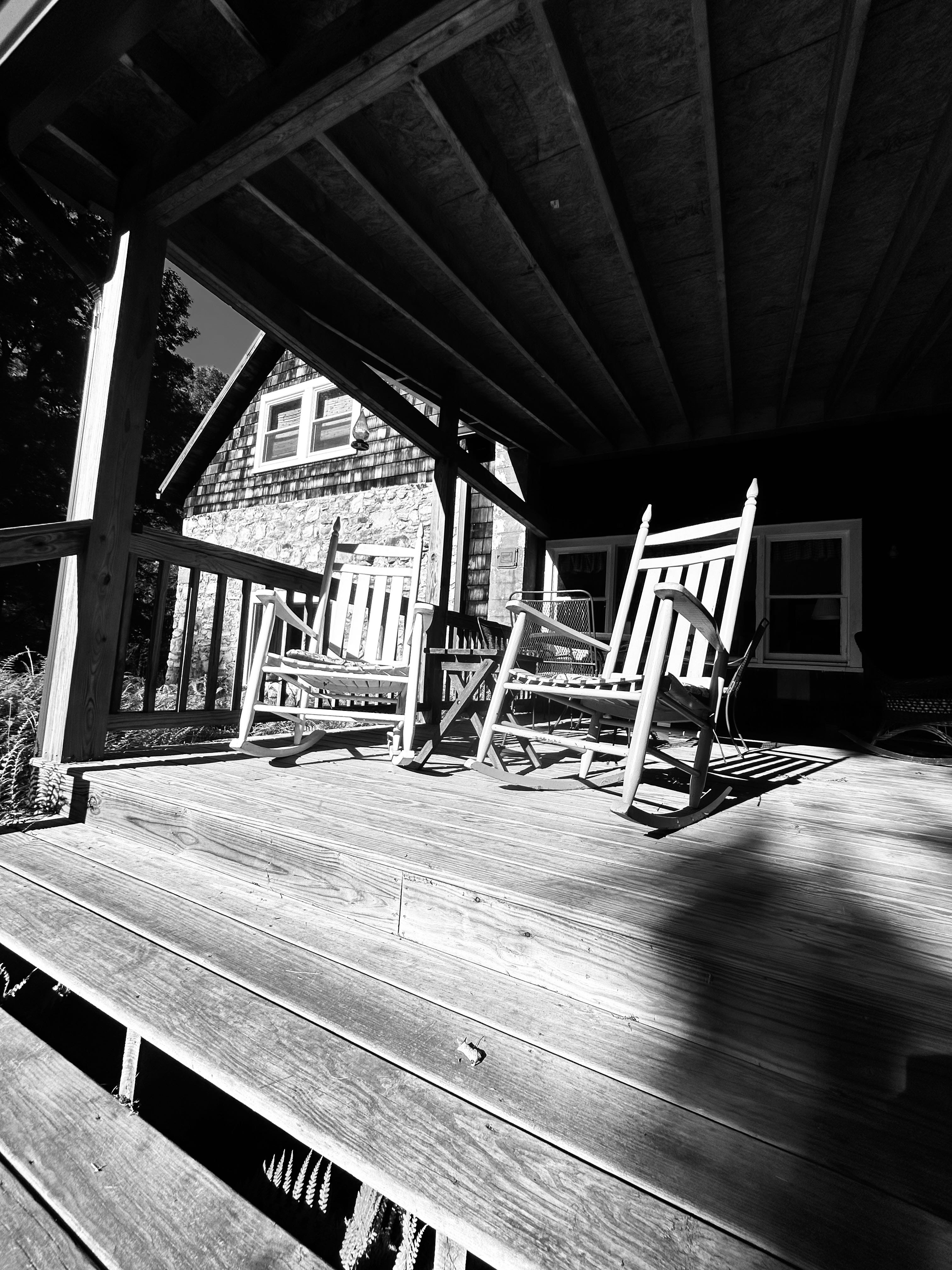
Most mornings include coffee and conversation on the porch with my brother Michael, the retired union pipefitter who walks to the cabin each morning as part of his practice. Occasionally, while traveling, I find a yoga class and am reminded of the quiet strength of practicing with others.
Last week, two messages arrived on the same day that helped me understand why that practice has become so important to me.
One was from my friend Chip Conley, founder of the Modern Elder Academy, where I spent a week in April 2023. The other was a column by a Boulder friend Priscilla Dann-Courtney reflecting on sixty consecutive days of yoga.
Read together, they felt less like coincidence than conversation.
Chip wrote, “The older I get, the more I’m convinced wisdom is subtraction.”
We usually think of wisdom as accumulation—more experience, more knowledge, more credentials, more opinions, more certainty.
Chip argues the opposite.
The wisest people he knows have let go of the need to prove themselves, the reflex to have an answer for everything, and the illusion that certainty is the same thing as understanding.
His definition of wisdom is wonderfully simple:
Metabolized experience, mindfully shared for the common good.
That word—metabolized—wouldn’t let me go.
Experience alone doesn’t make us wise; if it did, age would guarantee wisdom. Experience has to be examined, digested, and transformed into something we can share with others.
Priscilla approached the same idea through practice. Writing about conscious breathing, she rearranged the letters in BREATH to become B-EARTH.
I smiled when I read it.
Breathing doesn’t take us away from the world.
It grounds us in it.
Her insight begins by grounding us in ourselves.
But what grounds us in one another?
In a later note, Priscilla offered another simple rearrangement.
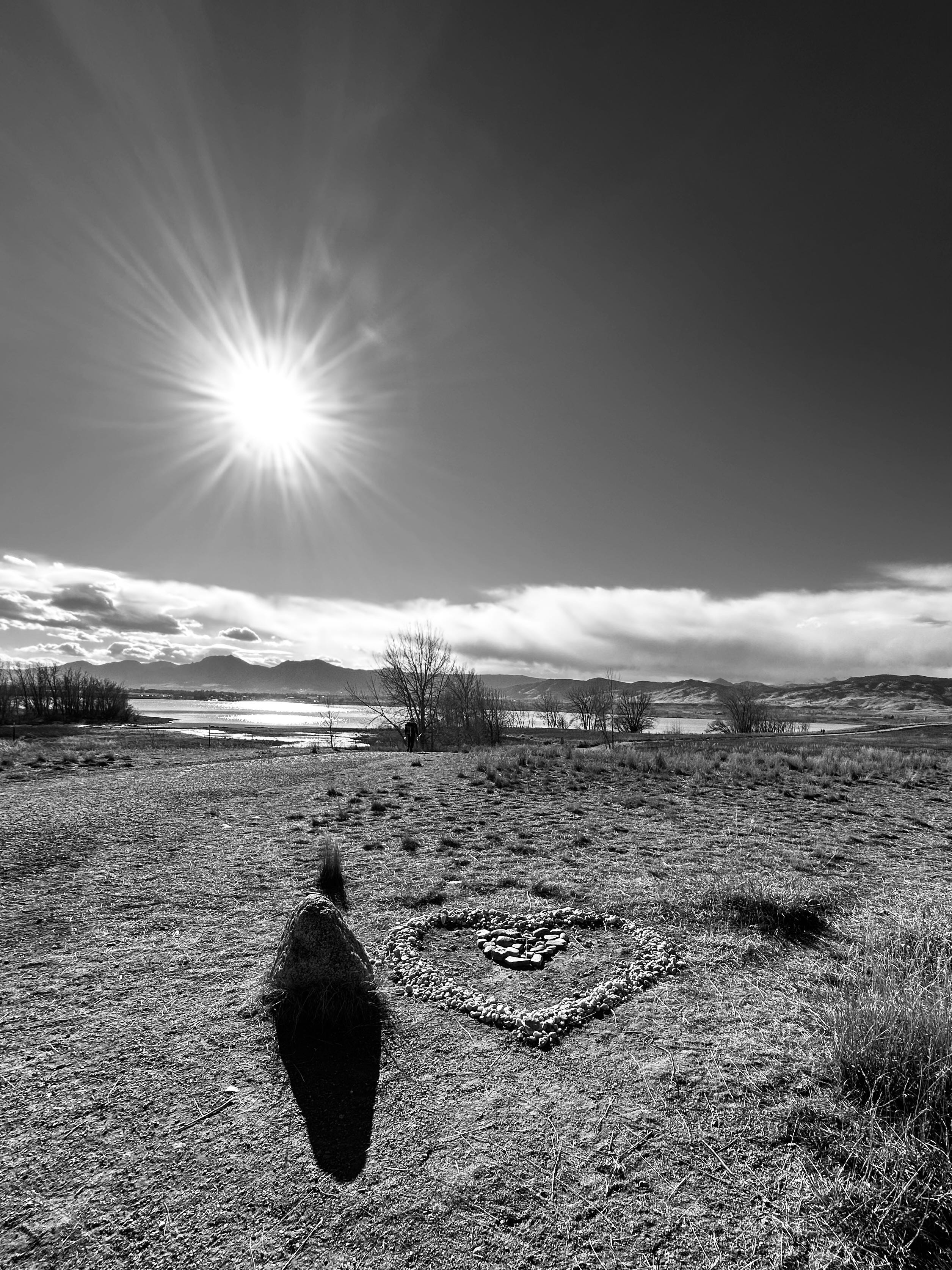
HEART.
Move the “H” from the beginning to the end.
EARTH.
Nothing has been added.
Nothing has been lost.
Only the relationship has changed.
Perhaps wisdom works that way too.
We don’t become someone else.
We rearrange what life has already given us.
We subtract the noise.
The endless performance.
The need to prove.
The addiction to certainty.
What remains is enough.
Practice grounds us so that we are ready for the moments when our neighbors and country need us.
We saw this in Minneapolis during the bitter cold of January through what The Atlantic writer Adam Serwer calls neighborism—the commitment to protecting the people around you, no matter who they are or where they came from.
For weeks, ordinary people delivered food to frightened families, escorted children to school, documented abuses, and stood peacefully beside neighbors who were being threatened.
Those acts may appear extraordinary.
But people rarely invent courage in the moment they need it most.
More often, they fall back on what they have practiced.
We become what we practice.
That is why these practices matter.
Returning to the mat before dawn.
Riding a mountain bike down a dirt road.
Sitting quietly with a book.
Calling a friend.
Walking into the library.
Inviting a neighbor for a meal.
None of these, alone, is democracy.
Together, they cultivate the habits of attention, humility, generosity, and presence that make democracy possible — as natural, in time, as breathing.
Or perhaps, as Priscilla reminds us…
…the next B-EARTH.
Then we stand up, return to the world, and begin again.
One breath.
One neighbor.
One small act of human generosity at a time.
P.S. If this essay resonates with you, I’d invite you to take a minute for one small act of democratic practice.
Visit MNOMINATE.org and send a message to the Norwegian Nobel Committee supporting The Nation’s nomination of the people of Minneapolis for the 2026 Nobel Peace Prize.
The prize will be announced on Oct 9, 2026
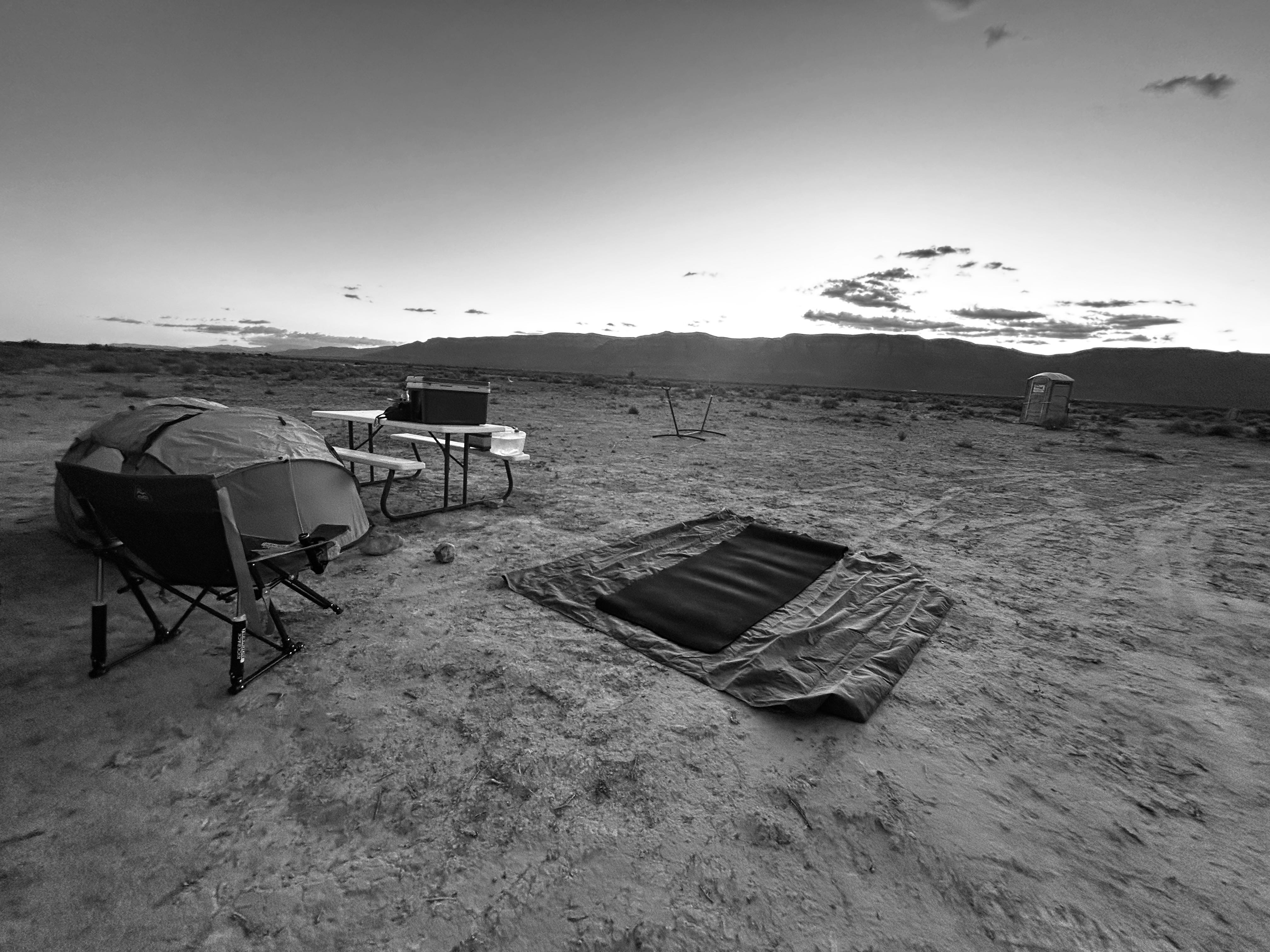
(Gift Photo: My campsite with yoga mat in the Chihuahuan Desert in May)
Oh Tom, this is a beautiful essay. I appreciate your words very much. Thank you so much. Nominating the people of Minneapolis for the Nobel Peace Prize is brilliant. Blessings to you.
Loved this one . 🩵